As America prepares to celebrate its 250th anniversary, many travelers are planning visits to Philadelphia, Boston, and Williamsburg.
Yet one of the nation's most remarkable historic cities often receives far less attention.
Annapolis.
Here, the story of America's founding isn't confined to museums. It lives in the brick streets beneath your feet, the waterfront that shaped the city's history, the homes of Maryland's Declaration signers, and the architecture that has defined this city for more than two centuries.
People often ask me where I take friends and family when they visit Annapolis for the first time.
The answer is never a checklist of attractions.
It's an afternoon spent wandering one of America's most beautiful waterfront cities.
Here's where we'd go.

Arrive by Boat
The best way to experience Annapolis is from the water.
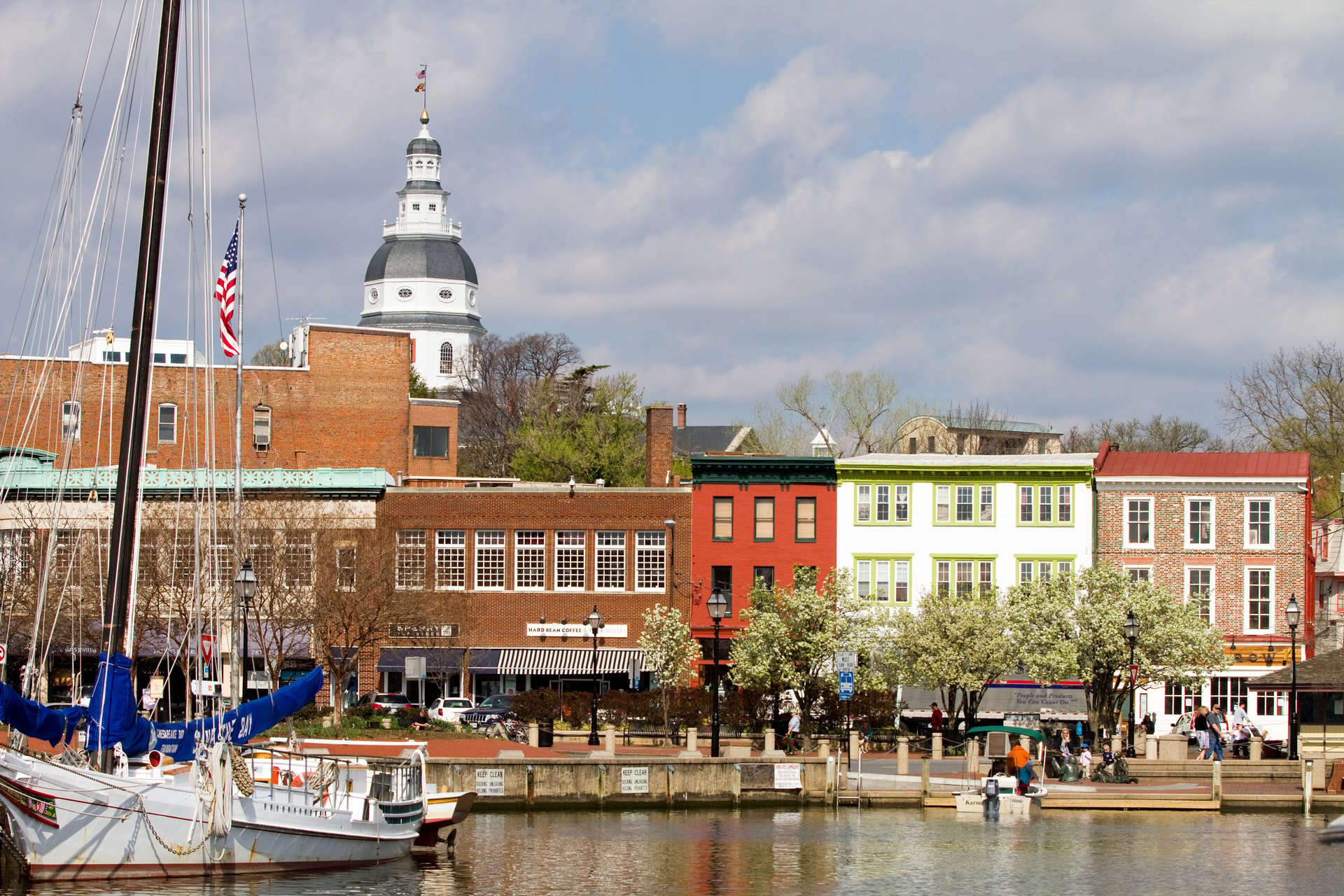
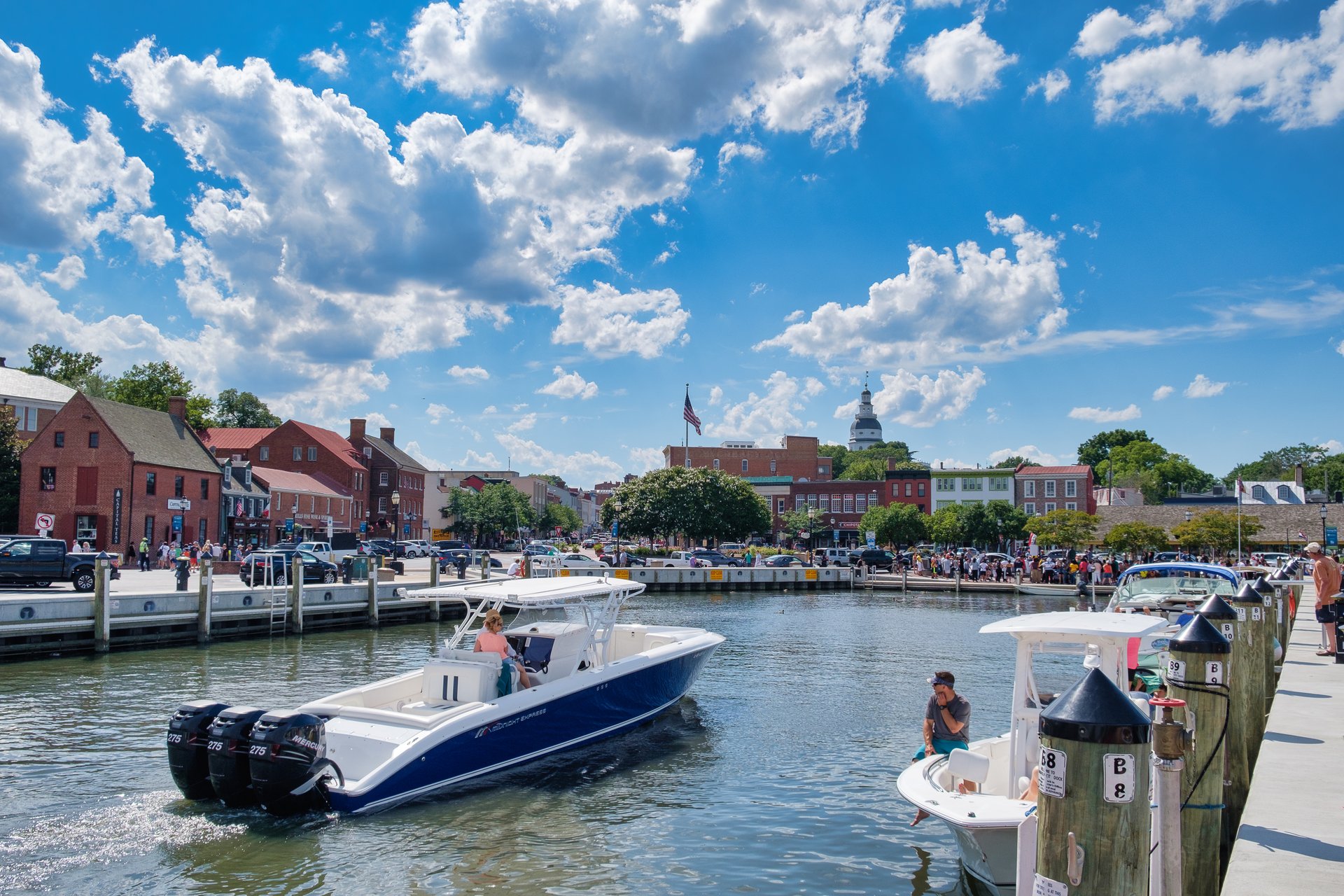
If possible, we'd arrive by boat, cruise into Ego Alley, and tie up at City Dock. It's the same harbor that has welcomed sailors, merchants, dignitaries, and visitors for generations.
Before setting off, we'd grab coffee from Rise Up or Bitty & Beau's and begin exploring on foot.
Walk Through a Living Historic District
The beauty of Historic Annapolis isn't found in a single landmark.
It's found between them.
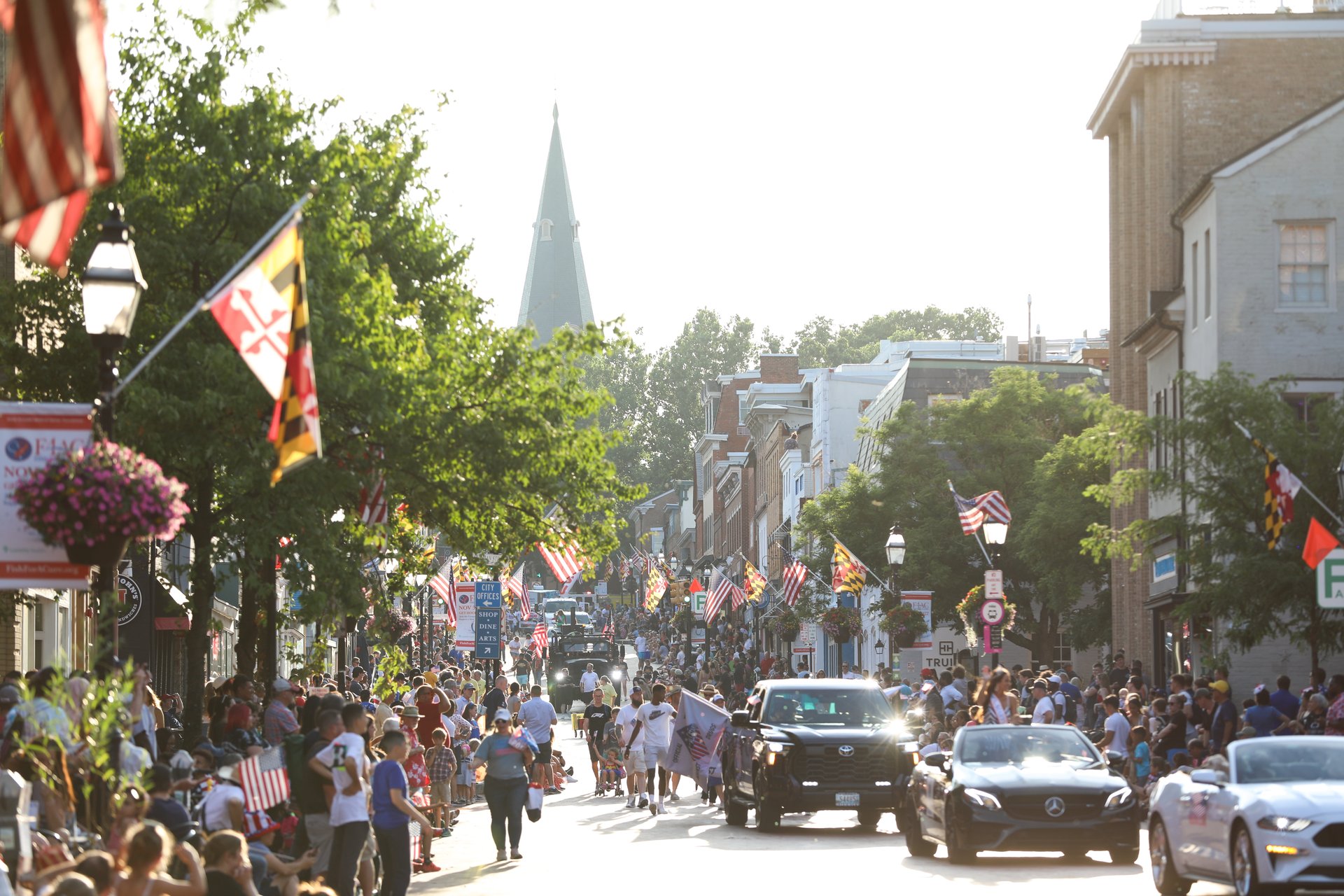
Few visitors realize that Annapolis is home to one of the nation's most extraordinary collections of colonial brick architecture. Historic mansions, Georgian townhomes, church spires, hidden gardens, and centuries-old brick streets come together to create one of the most distinctive waterfront cityscapes in America.
Every block offers another architectural detail, a hidden courtyard, or a quiet garden worth stopping to admire.
Maryland's State House
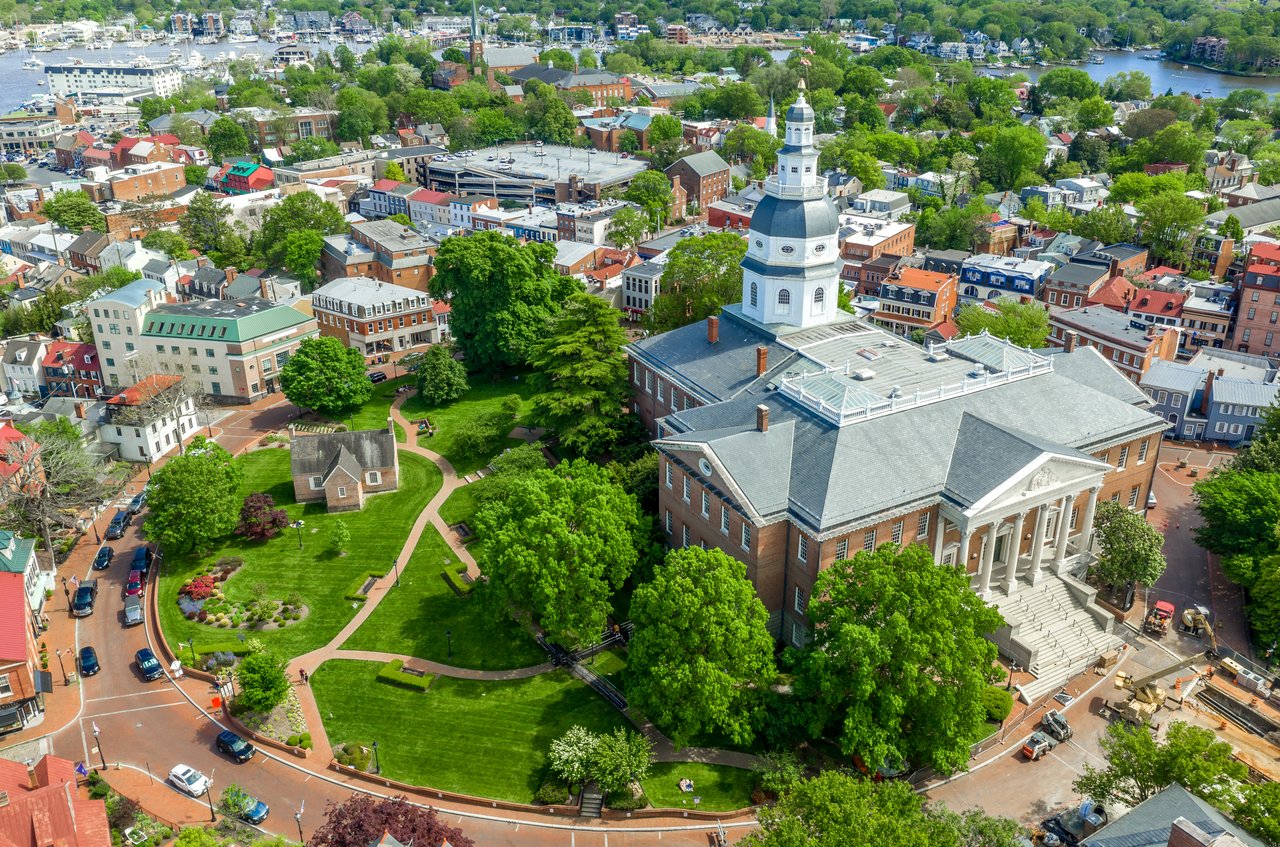
Our first stop is State Circle.
Completed in 1772, the Maryland State House is the oldest state capitol still in continuous legislative use and the only state house ever to serve as the nation's capitol.
It was here that George Washington resigned his commission as Commander in Chief of the Continental Army in December 1783, setting an enduring precedent for the peaceful transfer of military power to civilian government.
Standing beneath its iconic dome, it's easy to appreciate Annapolis' lasting role in American history.
The William Paca Garden
Just a short walk away is one of my favorite places in the city.
Hidden behind the William Paca House, this beautifully restored two-acre Georgian garden feels like stepping into another century.
Brick paths wind through formal gardens, terraces, a fish-shaped pond, and seasonal blooms. During hydrangea season, it's one of the most beautiful places in Annapolis.
It's peaceful, elegant, and often surprises even longtime residents.
Hammond-Harwood House
Architecture lovers should never miss the Hammond-Harwood House.
Completed in 1774, it is widely regarded as one of the finest examples of colonial architecture in America.
Thomas Jefferson greatly admired the home's Palladian design and sketched it during his time in Annapolis, recognizing its architectural significance.
More than 250 years later, it remains one of the city's greatest treasures.
Walking Through America's Founding
As we continue exploring, we'll pass homes connected to Maryland's four signers of the Declaration of Independence.
William Paca. (William Paca House & Gardens)
Samuel Chase. (Chase-Lloyd House)
Charles Carroll of Carrollton. (Carroll House at St. Mary's)
Thomas Stone. (Peggy Stewart House- a private residence)
Three of those historic homes are open to visitors today, offering a rare opportunity to experience the places where Maryland's founders lived, worked, and helped shape a new nation.
Few American cities offer that connection within a walkable Historic District.
Hidden Gardens and Quiet Corners
Some of my favorite moments in Annapolis happen between destinations.
A brick alley covered in ivy.
Hydrangeas spilling over an iron fence.
A quiet pocket park tucked between historic homes.
A church bell echoing through downtown.
These small moments are what transform a visit into an experience. Make sure you walk along Market Street, to Shipwright and Revel Streets in downtown Annapolis, and note the historic markers on the homes; each marker's color is for a different time period and architectural style.
End the Day Along the Waterfront
As the afternoon gives way to evening, we'd linger along the waterfront with a cocktail overlooking the harbor before making our way to dinner.
Some evenings call for authentic coastal Italian fare at Osteria 177 in the heart of downtown.
Others deserve a walk across Spa Creek to O'Learys in Eastport, where Chesapeake seafood and waterfront charm make the perfect ending to the day.
Then we'd watch the sun set over the Severn River as sailboats make their way home.

Why People Fall in Love With Annapolis
The landmarks are extraordinary.
The architecture is timeless.
The waterfront is unforgettable.
But what makes Annapolis truly special is how naturally those things become part of everyday life.
As America celebrates 250 years, Annapolis offers something few places can. The opportunity to experience the story of our nation while enjoying a lifestyle shaped by the Chesapeake Bay, enriched by centuries of history, and defined by an enduring sense of place.
Perhaps that's why so many people come here as visitors.
And begin imagining what it would be like to call Annapolis home.
Whether you're planning your first visit or considering your next move, there's no better way to understand Annapolis than by walking its streets, exploring its gardens, and experiencing the waterfront that has shaped this remarkable city for generations.
Tell us in the comments which Annapolis landmark you recommend taking visitors to.